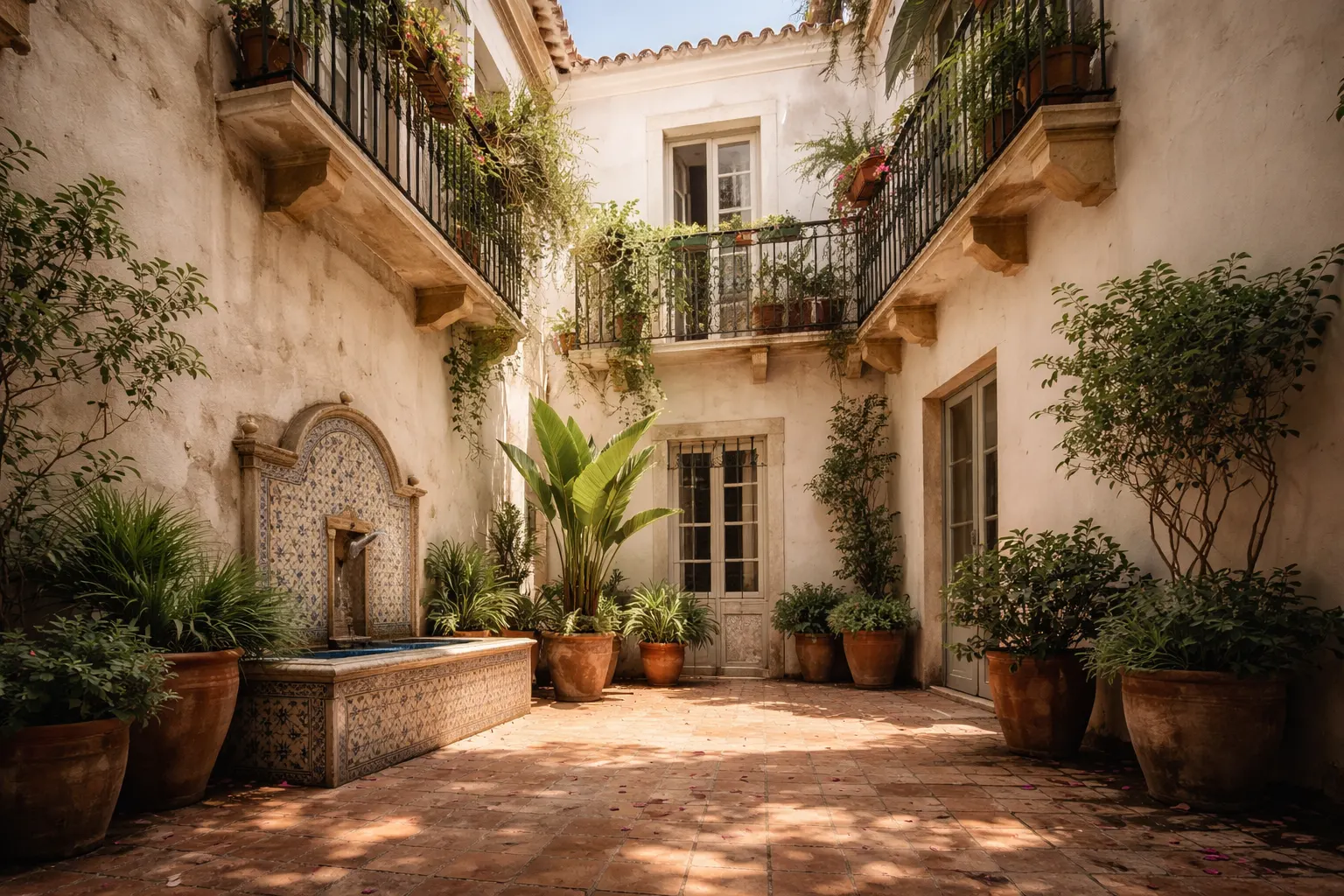
The first “boutique” I booked in Barcelona cost me €180 a night. The lobby smelled like an airport hotel, the hallway had the same beige carpet you find in every Ibis in Europe, and the only handwritten anything was a sticky note telling me the WiFi password. The second time — same city, different trip — I found one in Barcelona for €107. Rooftop terrace. Handwritten welcome note on the pillow. A 9.4 location score in Gràcia, two minutes from the market. The only difference was how I searched.
This is the method I’ve used since. Finding boutique hotels on a budget — genuinely boutique, not just hotels using the word — works in Bangkok, Lisbon, and everywhere in between. It’s the same system whether you’re after cheap boutique hotels in Asia or pricier options in Europe. Not every time, but reliably enough that I’ve stopped booking disappointments. Before the steps: “boutique hotel” isn’t a protected category. Any property can use the word. What you’re actually looking for is a place under roughly 40 rooms, independently operated, where the design belongs to that specific city — the kind of room that couldn’t exist in an anonymous business district. That’s the target. Below is how you find it without overpaying.
This post is part of the backpacking hacks system — the full toolkit for traveling better without spending more.
Table of Contents
- The 5-Step Boutique Hunter Method
- The Two Fake Boutique Traps
- Boutique Hotel Vetting Scorecard
- Price Reality by City Type
- Frequently Asked Questions
The 5-Step Boutique Hunter Method
Step 1: Start with map view, not list view
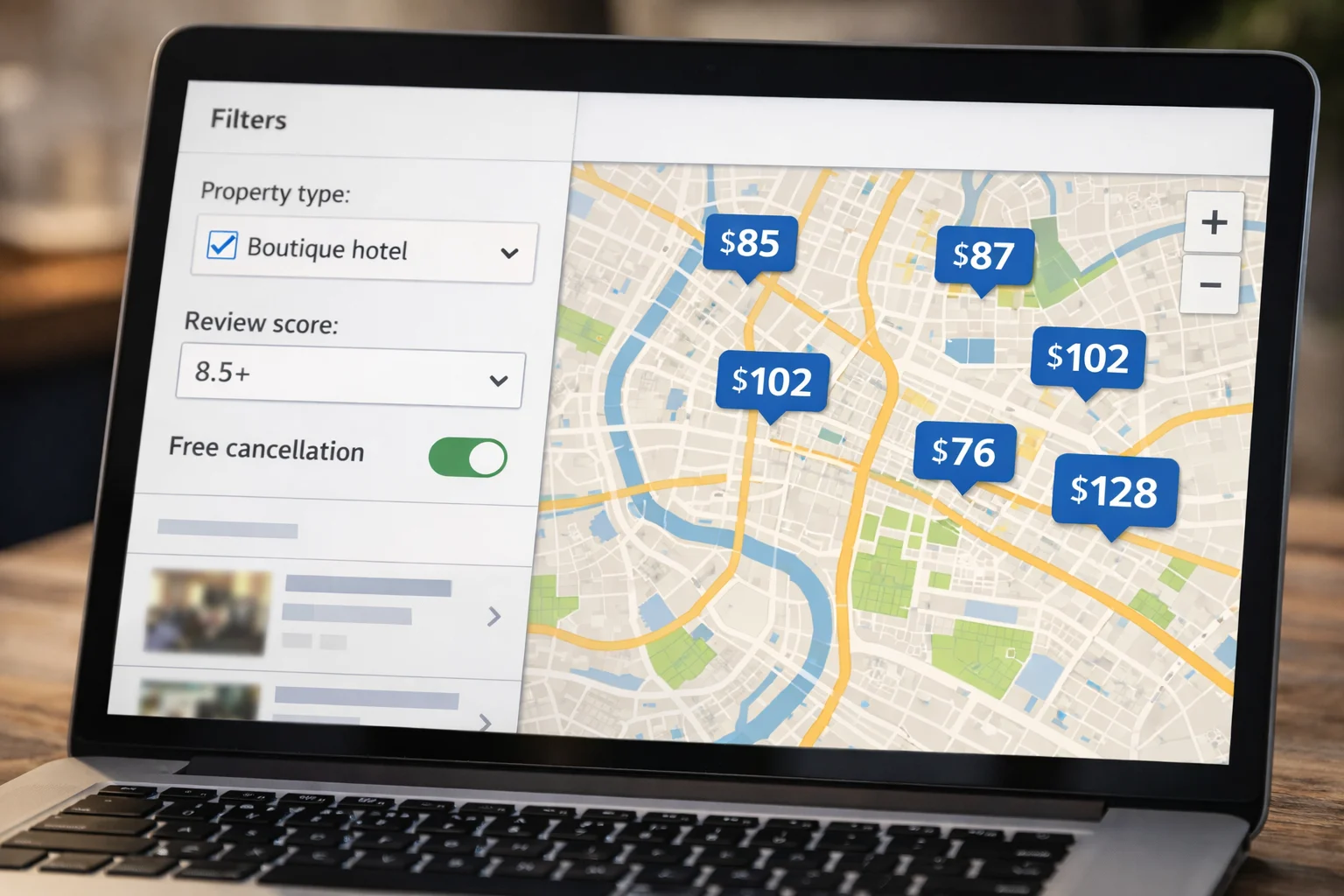
Most people open Booking.com and immediately scroll the list. That’s where the algorithm wins — it’s optimized for promoted properties, not for what you actually want. Switch to map view first. Zoom into the neighborhoods you’ve already decided are worth staying in. You’re not hotel-hunting yet. You’re geography-checking. A genuinely boutique hotel in the wrong neighborhood doesn’t give you what you’re paying for — the neighborhood feel is half the product.
Step 2: Apply the filter stack — in this order
Once you’re in map view with your dates and price range set, run these filters on Booking.com:
- Property type: tick “Boutique hotel” and/or “Hotel” — uncheck hostels, apartments, and chains unless you’re intentionally comparing
- Review score: 8.5 minimum. Non-negotiable. Below 8.5 in this category usually means the vibe isn’t landing with guests.
- Location score: sort by location and look for 9.0+. A boutique in a bad spot costs as much as one in a great spot — don’t pay boutique prices for chain-hotel convenience.
- Style tag: if available in your search area, tick “Design” or “Boutique” under the Style filter. It narrows the field — not perfectly, but usefully.
- Free cancellation: always on. You’re shortlisting, not committing yet.
Then sort by “Top reviewed” — not “Best value” (algorithm-gamed) and not “Price: low to high” (surfaces the wrong properties). Top reviewed correlates better with the experience you’re actually after.
If you’re Booking.com Genius Level 2 or higher, cross-filter Genius + 8.5 review score + boutique style tag — this combination is one of the fastest ways to surface independently-operated, well-reviewed options without wading through promoted results.
Step 3: Run the 60-second listing scan
You should now have 8–20 properties on screen. For each one, spend 60 seconds — not more — before clicking in:
- Photo variety: genuine boutiques show you the building exterior, the street outside, specific room details — the headboard, the tiles, the window view. Generic hotels show 40 photos of the same white duvet at different angles. If photos look professionally identical, move on.
- Room count: click into the property and find the room count under “About this property.” Anything over 60 is almost certainly not what you want. Under 20 is the sweet spot.
- Review language: sort reviews by “Most relevant” and skim the first 8. Look for words like “owner,” “staff remembered,” “hidden gem,” “felt like a local.” Avoid listings where the top reviews read like press releases — generic praise about value or cleanliness, not experience. (The exact phrases that give it away are in the Fake Traps section below.)
- Description self-labeling: if the hotel’s own copy uses “boutique” three times in the first paragraph without describing anything specific about the building or location, that’s a red flag. Genuine boutiques describe the story. Marketing-boutiques describe amenities.
Step 4: Cross-check on Google Maps
Before shortlisting, drop the hotel pin on Google Maps and street-view the block. This takes 90 seconds and has saved me from multiple bad bookings. What you’re checking: Is the immediate street interesting, or is it a service road behind a mall? Can you walk to a café, a market, a neighborhood restaurant in under five minutes? In my experience, this single step eliminates about a third of the properties that looked good on-screen. The boutique hotel Bangkok trap in Sukhumvit is exactly this — genuinely lovely 15-room hotels surrounded by neon signs and 7-Elevens. The neighborhood feel you’re paying for doesn’t exist there. The street-view step catches this before you book.
Step 5: Shortlist three, then message directly
Once three properties have passed the scan, message each hotel directly before booking through the OTA. Ask two things:
- Whether they have a direct booking rate. Many smaller properties will offer 10–15% off if you book directly — they’d rather skip the Booking.com commission than lose the booking. Not all do, but it takes two minutes to ask.
- One specific question about the property — anything that requires a human to answer. The speed and specificity of the response tells you more about the service level than any review score.
The Two Fake Boutique Traps
Most articles warn vaguely about “hotels that call themselves boutique.” But there are two distinct failure modes, and they need different detection methods.
Trap 1 — Listing deception
This is the 200-room hotel that uses “boutique” in its name, has 4,000 reviews with a suspiciously high average, and looks great in photos because it spent money on a photographer. The room count check kills this one immediately. The review language scan catches the rest: bulk-reviewed properties have a distinctive flatness in their top reviews.
The tell-tale phrases: “amazing value for money,” “clean and comfortable,” “great location.” Fine reviews for a budget hotel, but they’re telling you about logistics, not experience. A real boutique’s reviews get specific: “the owner recommended a restaurant on the corner that wasn’t in any guidebook,” “I’ve stayed here three times now.” That level of specificity doesn’t get faked at scale.
Trap 2 — Location deception
This one is more insidious because the hotel itself might be genuinely small and well-designed. The problem is where it sits. Bangkok is the clearest example: there are legitimately lovely shophouse hotels in the Nana/Asok section of Sukhumvit that photograph beautifully. But the moment you step outside, you’re on a street optimized for mass tourism. What makes a boutique hotel work is the interplay between the property and its neighborhood — and that interplay doesn’t exist in the wrong location.
The Google Maps street-view step in Step 4 exists entirely to catch this trap. Five minutes on street view before you book is worth more than reading 50 reviews.
Boutique Hotel Vetting Scorecard
Before booking any property, run through the interactive checklist below. Tick each signal as you check it — your score updates live. Screenshot or bookmark it for every future trip.
Boutique Hotel Vetting Scorecard
Tick each signal as you check it — your verdict updates automatically.
Price Reality by City Type
These ranges are for a double room, one to two people. They're based on current availability patterns for affordable boutique hotels — not aspirational outliers. You can find something below the floor occasionally, but don't plan around it.
| City / Type | Shoulder Season | Peak Season | What that buys you |
|---|---|---|---|
| Bangkok (budget-tier city) | $30–55/night | $45–80/night | At $35–45: 10–20 room shophouse in Ari or Charoenkrung, rooftop or courtyard, strong review score |
| Lisbon (mid-tier, rising) | €65–110/night | €95–150/night | At €75–90: a proper boutique hotel in Lisbon — converted townhouse in Mouraria or Príncipe Real, under 25 rooms, 9.0+ location score |
| Barcelona (mid-tier, competitive) | €75–120/night | €110–165/night | At €90–110: design hotel in Gràcia or Poblenou, owner-run feel, midweek discount possible |
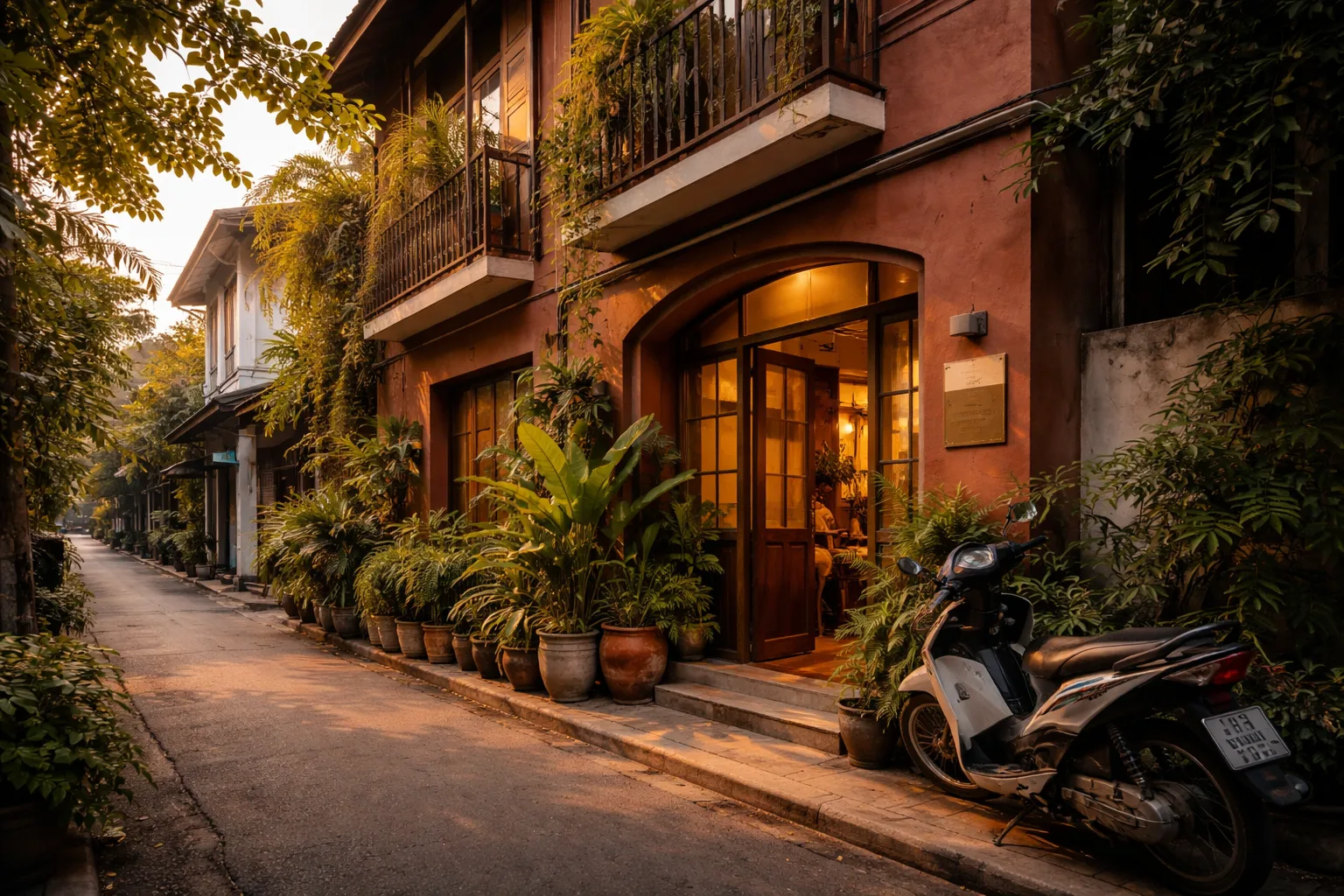
| Budget SE Asia (Chiang Mai, Hội An, etc.) | $20–40/night | $30–55/night | At $25–35: boutique guesthouse, genuinely characterful, often family-run |
| Expensive Europe (Amsterdam, Paris, Zürich) | €120–180/night | €160–220/night | Finding boutique hotels on a budget here means smaller rooms in better neighborhoods — trade space for location |
Prices based on 2024–2025 searches — rates vary by season and availability.
Frequently Asked Questions
Start the Search Tonight
The method works best when you run it on a real trip. Pick one coming up, open Booking.com in map view, zoom into the neighborhood you actually want to stay in, and run the filter stack from Step 2. Set a 60-minute timer. You'll have a shortlist of three — run each through the scorecard above before committing.
If you want to go deeper on the accommodation decision — when what is a boutique hotel beats a hostel private room, when a villa split wins for groups, when neither is worth it — that's all covered in the backpacking hacks guide.
This guide reflects general search methods and price patterns. Hotel availability, pricing, and platform features change — always verify on the booking platform before committing.