
Last updated: June 2026.
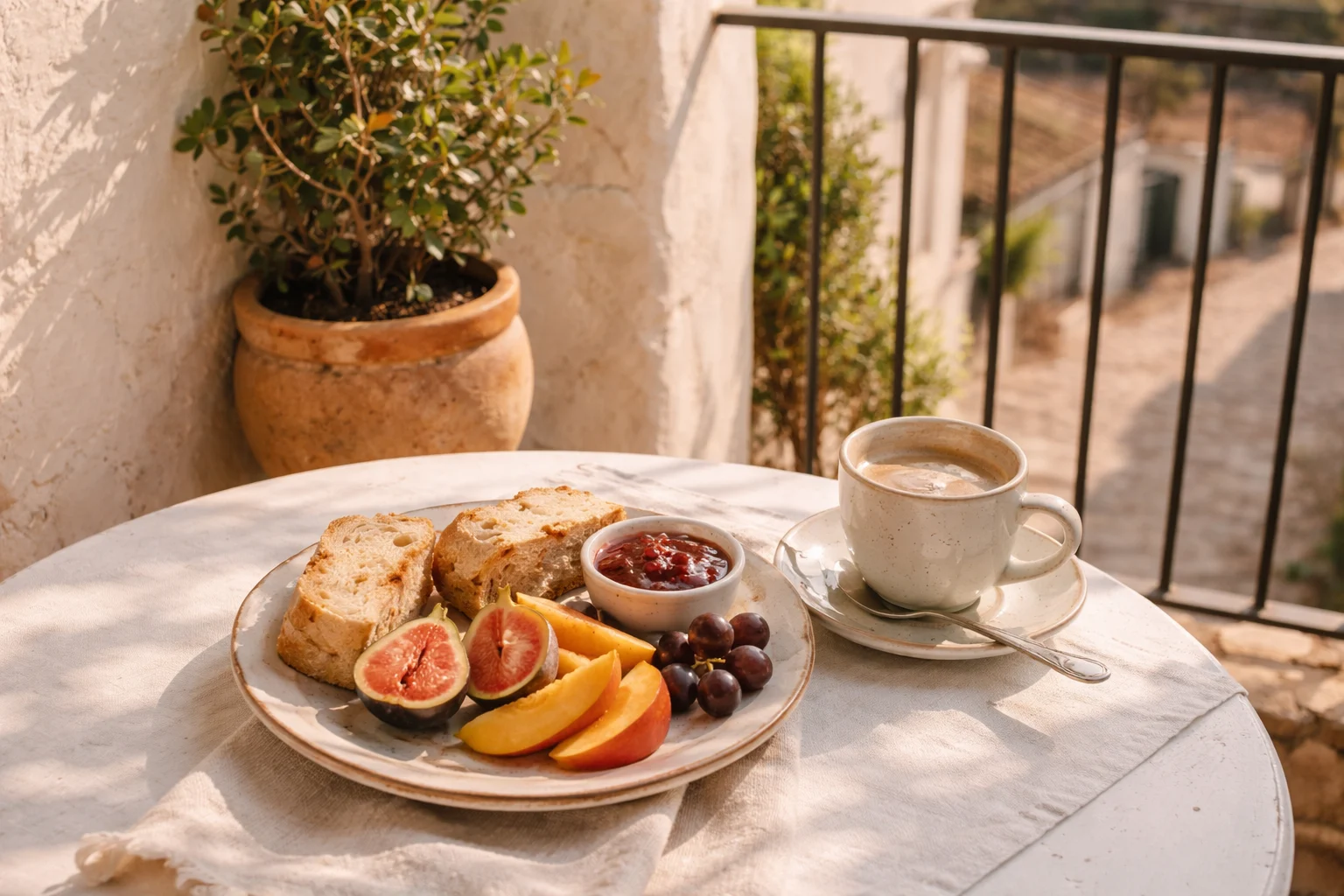
Eleven nights in Portugal. Private villa with an infinity pool, daily cleaning, a terrace where we had coffee every morning watching the valley. Food budget: €42 a day for two. Total trip including flights: $2,745 for two. We came home more relaxed than we had in three years.
That’s not a flex. That’s a system — and it works whether you’re heading to Portugal, Thailand, or Colombia. Planning an affordable luxury vacation doesn’t require a bigger budget — it requires a better system for where your budget actually goes. And once you see how it works, you’ll realize you’ve probably been overspending on the things that matter least and underspending on the ones that would transform the trip.
For the full luxury backpacking system behind this approach, see our complete luxury backpacking guide.
Table of Contents
- What “Affordable Luxury” Actually Means
- The Splurge vs. Save Framework
- Find Your Best Upgrade
- Where the Math Actually Works
- One Complete Trip Breakdown
- The Three Mistakes That Kill Affordable Luxury
- Your Next 48 Hours
- Frequently Asked Questions
What “Affordable Luxury” Actually Means
Let’s set real parameters first, because “affordable” without a number is meaningless.
For this framework, a trip in this style means: a 7–10 day trip for two that costs $3,000–$5,500 all-in (flights, accommodation, food, experiences, transfers) — and feels significantly more comfortable than a standard mid-range trip at the same price.
The best luxury travel tips aren’t about booking the most expensive things — they’re about knowing which upgrades actually reach you. The principle is the same everywhere: concentrate your spending where it affects how you feel, and cut everywhere else without noticing.
That word, feels, is the key. Affordable luxury isn’t about star ratings or brand names. It’s about comfort signals — the things that actually determine whether you come home relaxed or exhausted:
- A private room with a real bed and a bathroom that doesn’t make you cringe
- A location that means you’re not spending 90 minutes in transit every day
- Enough space to decompress — a terrace, a kitchen, a living room that isn’t the lobby
- One or two experiences that feel genuinely elevated, not just expensive
None of that requires $8,000. It requires knowing where to put the money you have.
The mindset shift: Stop asking “how do I get luxury for less?” and start asking “which parts of this trip actually matter to me?” Most people are overpaying for things they don’t care about and underspending on the things that would transform the trip.
The Splurge vs. Save Framework
The best frugal travel tips aren’t about cutting everything — they’re about cutting the things you won’t notice, so you can spend on the things you will. That’s the whole framework: spend on things that directly affect how rested and comfortable you feel. Save on everything that doesn’t — even if it feels like it should matter.
| Category | Splurge Here | Save Here | Why It Matters |
|---|---|---|---|
| Sleep | Private room, good mattress, quiet location, working AC | Brand name hotels, lobbies, pools you won’t use | Bad sleep ruins everything. No upgrade recovers a bad night. |
| Location | Central neighbourhood, walkable to things you care about | Bigger room 40 min from everything | Transit time is dead time. Location multiplies every day. |
| Arrival | Private transfer first night, especially late arrival | Business class on short-haul flights, airport lounges | Arriving relaxed sets the tone. Arriving stressed at midnight after a cheap transfer doesn’t. |
| Experiences | One genuinely great meal, one private or small-group tour | Every meal, every paid attraction, tourist traps | Concentrated luxury beats distributed mediocrity. One $90 dinner beats five $20 ones you didn’t enjoy. |
| Food rhythm | Coffee and breakfast at a local spot daily | Hotel breakfast packages, tourist-area restaurants | A €4 espresso at a neighbourhood bar feels more luxurious than a €22 buffet that tastes like an airport. |
| Flights | Reasonable departure times, max one stop | Business class under 7 hours, checked luggage you don’t need | A $190 flight at 9am beats a $90 flight at 5am with a 4-hour layover. Time is the real luxury. |
| Space | Apartment or villa with a kitchen and outdoor area | Hotel gym, concierge services, room service | Having somewhere to decompress privately changes the entire feeling of a trip. |
Notice what’s not on the splurge list: star ratings, hotel brand names, business class as a default, or premium everything. Luxury doesn’t need to be distributed evenly across a trip. It works best when it’s concentrated exactly where it reaches you.
Find Your Best Upgrade
Answer three questions to find the specific upgrade that will change your trip most.
Step 1 of 3
What ruins trips for you most?
Once you know which upgrade matters most, the next variable is where that upgrade goes furthest — destinations where the same spend delivers meaningfully more comfort.
Where the Math Actually Works
The best comfort-to-cost ratio in travel right now isn’t in hotel promotions — it’s in the gap between a peak-season chain and a shoulder-season boutique. According to Hopper’s booking data, airfare to Europe runs ~40% lower in shoulder season than at peak summer — and accommodation in major European cities drops an average of 27% in December versus June. That gap is where affordable luxury lives.
Here are six destinations where the comfort-to-cost ratio genuinely works, with realistic ranges to plan around:
| Destination | Boutique/Villa Avg/Night | Food Budget/Day (2 people) | Shoulder Window | Best For |
|---|---|---|---|---|
| Portugal (Alentejo / Silver Coast) | $110–$160 | $45–$60 | Mar–May, Oct–Nov | Villa splits, slow travel, food |
| Greece (mainland / non-Santorini islands) | $95–$145 | $40–$55 | May, Sep–Oct | Private pools, boutique guesthouses |
| Thailand (Chiang Mai / Hua Hin) | $55–$90 | $25–$40 | Nov–Feb | Best pure value, genuinely luxurious feel |
| Mexico (Oaxaca / Mérida) | $80–$130 | $35–$50 | Oct–Nov, Feb–Mar | Boutique hotels, food scene, proximity for US travelers |
| Italy (Puglia / Basilicata) | $120–$180 | $50–$70 | May–Jun, Sep | Trulli, masserie, off-tourist-trail Italy |
| Colombia (Medellín / Cartagena) | $70–$120 | $30–$45 | Dec–Feb, Jul–Aug | Villa splits, boutique hotels, genuinely underpriced |
A note on expensive countries: France, Germany, and Scandinavia look unworkable until you apply the same framework. A self-catering apartment in Lyon in October runs $95–$130 per night and you’re eating like a local for €30 a day. The mistake is booking a hotel in Paris in August and wondering why it cost $4,000 for a mediocre week.
One Complete Trip Breakdown

Here’s exactly what an affordable luxury vacation actually costs. Two people. Ten nights. Portugal, shoulder season.
| Line Item | Detail | Cost |
|---|---|---|
| Flights (return) | London → Lisbon, direct, morning departure | $340 |
| Accommodation | Private villa, Alentejo region, 10 nights avg $138/night | $1,380 |
| Food & drink | €42/day average — local cafés, markets, two restaurant dinners | $490 |
| Transfers | Private airport transfer (arrival) + local car rental 4 days | $280 |
| One signature experience | Private wine tour + lunch, Alentejo vineyard | $180 |
| SIM cards, laundry, incidentals | Two eSIMs + one laundromat visit + misc | $75 |
| Total | $2,745 for two |
Villa split with a second couple: $138/night becomes $69/night per couple. Total trip per couple drops to $2,055 — that’s the upgrade lever most people miss. The villa math is where the system really opens up — the same logic applies in Southeast Asia, where a private villa in Bali often costs less per person than a mid-range hotel room.
What did it feel like? A private pool. A kitchen stocked from a local market. Dinner on the terrace most nights. One genuinely excellent meal at a vineyard restaurant. No noise, no queues, no “is this worth it?” anxiety. It felt like considerably more than it cost.
The villa split rule: If you’re travelling with another couple or a small group, always run the villa math before booking hotel rooms. In most destinations on this list, a private villa costs the same per couple as two separate hotel rooms — and delivers a completely different experience.
The Three Mistakes That Kill Affordable Luxury
1. Spending on the flight instead of the room. Business class on a 2.5-hour flight costs $400–$800 extra. That same money gets you four nights in a significantly better villa. The flight is 2.5 hours. The room is where you actually live. The most useful luxury travel tip for flights is simpler than most people expect: book a reasonable departure time and put the savings into where you sleep. Most people get this backwards, and it’s an expensive habit to break.
2. Booking peak season because the dates work. The difference between August in Santorini and September in Santorini is roughly 40% on accommodation costs, far fewer tourists, and actually being able to get a table at a restaurant. Shoulder season isn’t a hack — it’s just not being in a hurry.
3. Using star rating as a proxy for comfort. A 3-star boutique guesthouse with strong recent reviews, a quiet location, and an owner who cares will beat a generic 4-star chain every time. In my experience, the worst nights of any trip have almost always been in “officially” well-rated hotels where the reviews were old. Star ratings measure amenities, not sleep quality, neighbourhood feel, or whether the walls are thin. Sort by most recent reviews and look for mentions of the things that actually matter: noise, mattress, location, water pressure.
Your Next 48 Hours
Don’t close this tab and do nothing. These aren’t abstract travel cheap tips — each step takes under 20 minutes and directly changes what your budget buys:
- Pick one destination from the table above that fits your travel window. Don’t overthink it — pick the one that felt right when you read it.
- Find the shoulder season window and check if your dates overlap. If they don’t, shift by 2–3 weeks if you can.
- Run the accommodation search differently. Filter by: private, kitchen, outdoor space, reviews 8.5+. Look at Booking.com, Airbnb, and direct booking sites. For specific hotel picks that hit this sweet spot, see our guide to boutique hotels on a budget. The difference in price between these and a brand-name hotel is usually where the entire upgrade happens.
- Do the villa math. If you’re travelling with another couple or small group, run the numbers on a private villa vs. two hotel rooms. In most destinations above, the villa wins on price and comfort simultaneously.
- Set one flight price alert. Not to find the cheapest fare — to know what you’re working with so you can allocate the rest of the budget properly.
The rest of the system — how to find boutique stays that actually deliver, how to plan routes that don’t waste transit time, and how to build a luxury minimalist packing list for backpackers so you never pay for checked luggage again — is what the rest of this site is built around.
Frequently Asked Questions
The most common questions about making the affordable luxury math work — answered directly.
Conclusion
Affordable luxury travel works almost anywhere once you know which parts of the experience actually matter to you. That Portugal trip — $2,745 for two, ten nights, genuinely the most relaxed either of us had felt in years — wasn’t an exception. It was the framework working. Sleep, location, and one genuinely elevated experience will do more for how you feel at the end of a trip than business class or a brand-name hotel ever will. Pick the destination. The complete luxury backpacking guide has the full framework.
This affordable luxury vacation guide is for general travel planning and education. Prices shown are reference ranges — always verify current rates before booking. Some links on this site may be affiliate links that earn commission at no extra cost to you. Recommendations are chosen for fit and value for this travel style.